Austin Silent Disco: From a Slow WordPress Site to a Fast Site the Owner Fully Owns
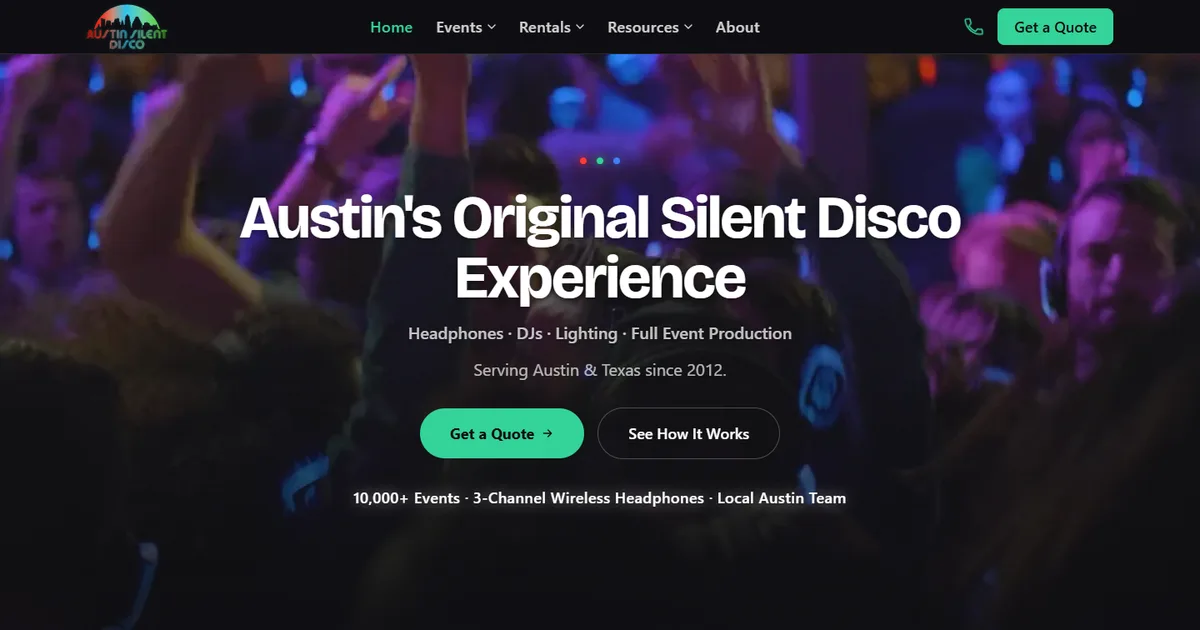
The situation
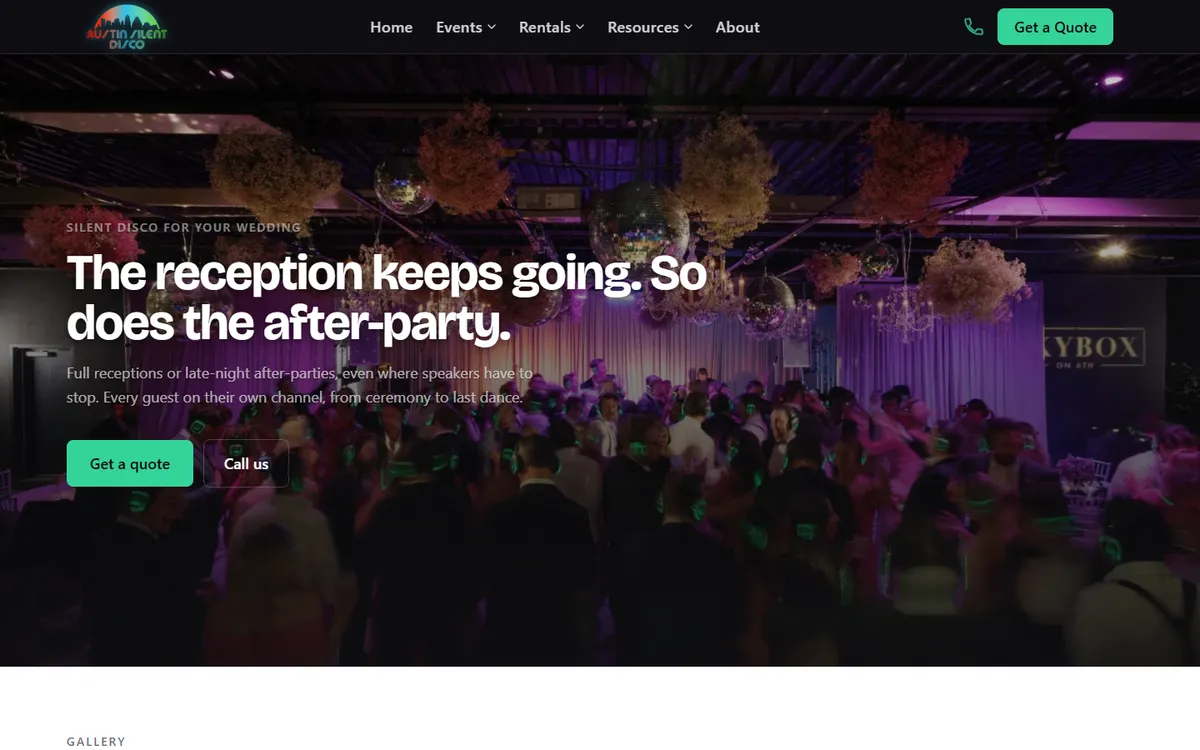
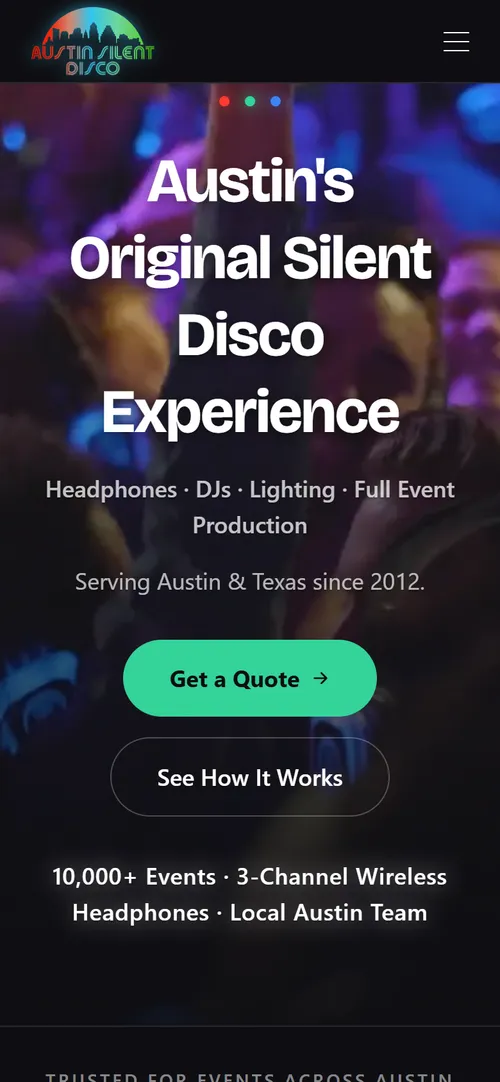
Austin Silent Disco rents wireless headphones and runs silent-disco events across Texas. It has been doing that since 2012, for companies like Google, Apple, Dell and SXSW, and for weddings, schools and backyard parties in between. The product is visual. Glowing headphones, a packed dance floor, three music channels at once.
The website didn't look like that. It sat on a WordPress.com Business plan.
This case study covers how I've worked with this client over time: first making the WordPress site work harder, then deciding it had reached its ceiling and moving it off WordPress completely.
Chapter 1: Making the WordPress site work harder
The owner told me he wasn't getting as many leads as he used to, and asked me to take a look at the business. The site was the obvious place to start. It had last been properly worked on in 2019, it looked dated, and it was heavy, bloated and hard to update.
So we started with fixes on the existing WordPress site:
- Cleaned up the systems behind the site.
- Redesigned the front-end landing page, with a UX-first approach: what does a visitor need to see, and what should they do next.
- Added an FAQ section, so the questions people ask before booking were answered on the site.
- Built a concierge to guide visitors toward a quote. It has since been retired, and I explain why below.
These fixes helped, but I was straight with him about their limits. They were patchwork on a platform that was working against us. To move the numbers in a real way, the site needed a redesign and a move off WordPress completely. I pitched him on that, and he said yes.
Chapter 2: Moving off WordPress
At some point patching stops being the answer. The redesign was built on Astro and hosted on Cloudflare, and it changed how the whole site is organized, not just how it looks. I measured the old homepage with Lighthouse on a mobile preset on 24 October 2026, before the switch. After launch, on 28 October, I ran the same tool with the same settings on the live site.
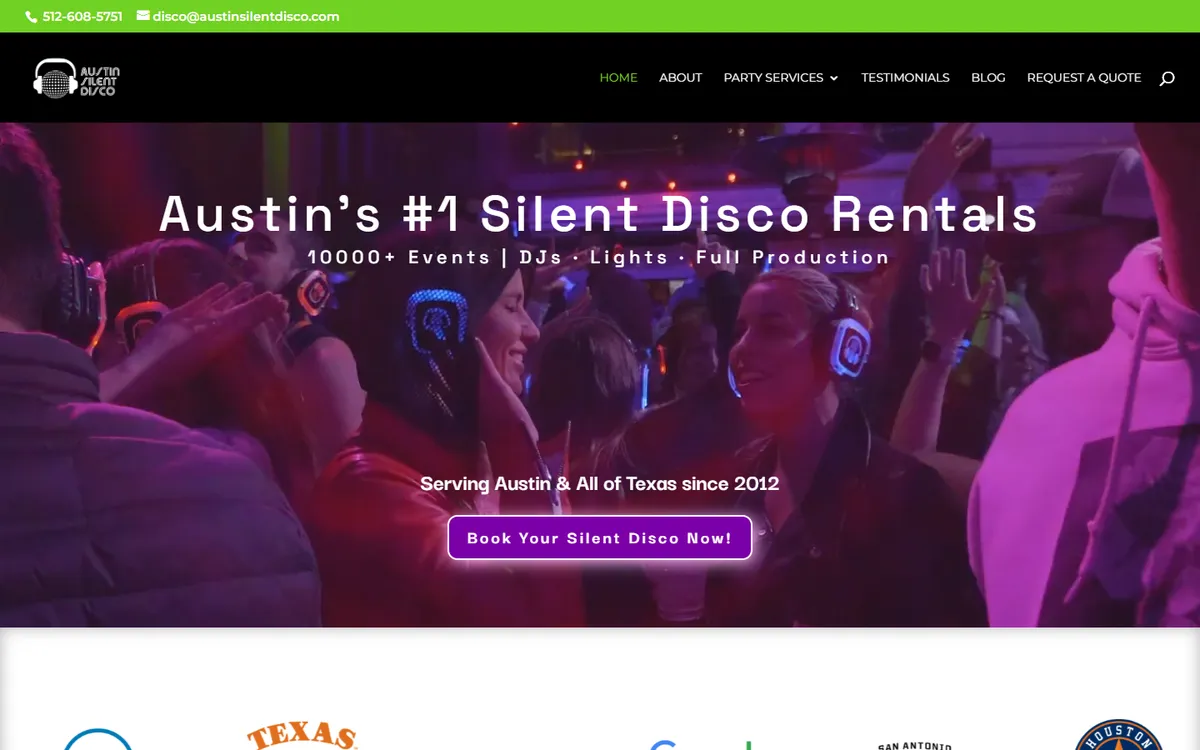 Before: the WordPress homepage.
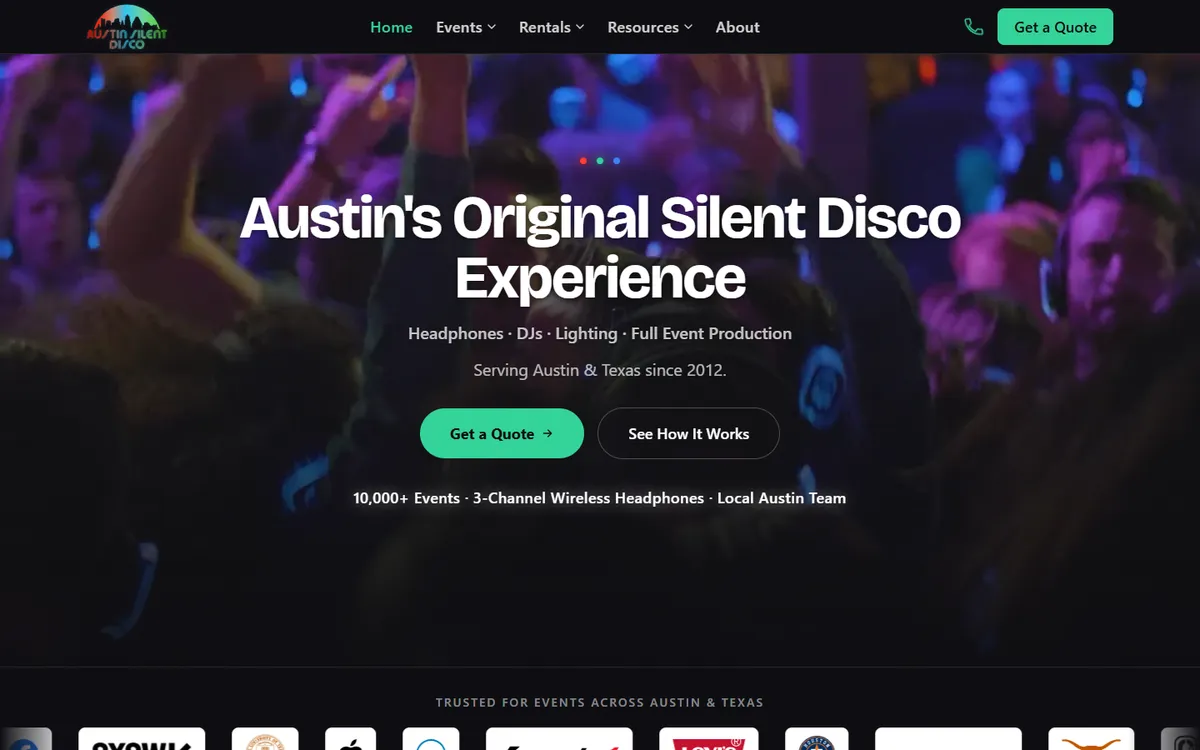 After: the same homepage on the new build.
The full comparison, mobile, homepage:
- Performance: 27 to 97
- Accessibility: 84 to 97
- Best Practices: 73 to 96
- SEO: 85 to 100
- Largest Contentful Paint: 26.0 s to 2.0 s
- First Contentful Paint: 2.3 s to 1.2 s
- Speed Index: 17.2 s to 2.4 s
- Total Blocking Time: 470 ms to 150 ms
- Layout shift: 0.824 to 0
- Network requests: 133 to 39
The old page was about 30 MB in 133 requests. The new one is 2.7 MB in 39, about 91% lighter. These are single homepage runs on a simulated mobile connection, so the exact scores move a few points from run to run. The gap between them doesn't.
What moved the number
- A hero that doesn't block the page. The old hero was a video, and it was the slowest thing on the page. Now a 17 KB image loads first, and the video fades in only after the page has loaded. It never plays for visitors who prefer reduced motion or have Save-Data on.
- Fonts that don't shift the layout. Self-hosted, subsetted fonts, with fallbacks matched to their metrics. The display font went from 75 KB to 22 KB.
- Right-sized images. Everything converted to WebP, with 720px variants for smaller screens and below-the-fold images told to load last.
- Critical CSS inlined, and long-lived cache headers set per asset type.
The hosting bill went away
The WordPress.com Business subscription is gone. The site now runs as static pages on Cloudflare, in the client's own account, so there's no hosting bill and no plugin stack to keep patched. Yoast, Jetpack, MailPoet and WPForms were all replaced by code that lives in a repo the client owns.
The part that could have gone wrong: SEO
The domain has years of search equity. Moving platforms carelessly can erase it, and the owner named protecting it as the top priority.
I built the redirect map from three sources: Google Analytics traffic per URL, Search Console, and backlink data. Each old URL was sorted into one of four groups: migrate, redirect, retire, or ask the owner.
Before launch I pulled every URL from the old site's sitemaps, 101 in all, and tested each one against the new site. The result:
- 30 already redirected in a single hop to a live page
- 10 correctly returned 410 Gone
- 2 were live pages
- 58 returned plain 404s
Fifty-three of those were WordPress tag and category archives. Four were orphaned pages, including /event-production/, which had around 247 users in Google Analytics. Those would have been dead ends for people and for Google.
I fixed all of them the same day. The tag and category archives now return 410. The orphaned pages redirect to the closest live page. The result: all 101 old URLs have a defined outcome, all 14 FAQ links land on a real anchor, every redirect points to a live page, and there are no redirect chains. Query strings are preserved, so tracked links such as ?utm_source= still work.
Redirects are served directly by Cloudflare before any code runs, so they cost nothing in speed.
What we built
Seven event types, each with its own page. Instead of one page for everyone, each type of customer gets its own: weddings, schools and camps, corporate, churches, private parties, festivals, and wellness. Wellness was added late, at the client's request.
Three rental levels. DIY pickup, a DJ experience, and full production.
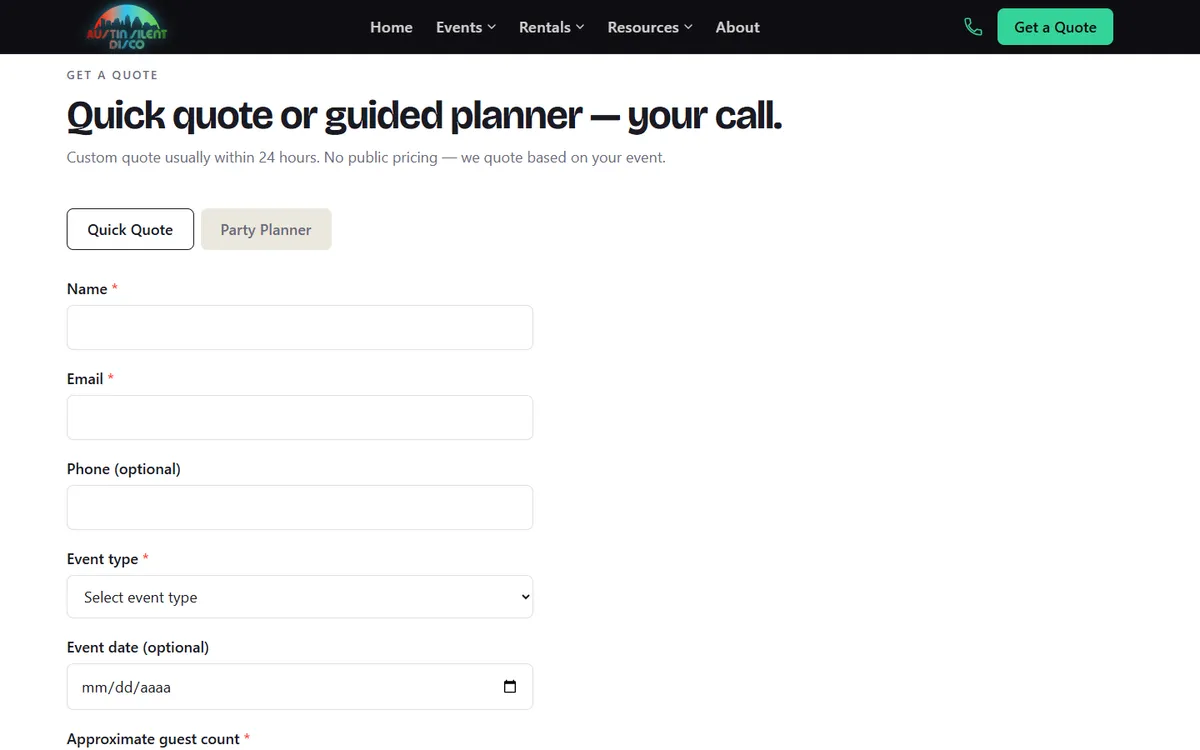
A quote funnel. The business runs on custom quotes, so the funnel is the product. The concierge from Chapter 1 became a party planner: more static, but faster and more efficient. A Quick Quote tool and the step-by-step planner take one question at a time, then send the lead to the owner's inbox. The /thank-you/ page tells people to check their spam folder, after a real test lead landed in spam.
Every lead source is tracked. Form submissions, phone taps, texts and emails each fire their own event, so the owner can see where leads actually come from.
Real proof on the page. A logo conveyor of 12+ clients, real Google reviews pulled from the Google Places API, and a rating badge. No stock photography, and no photo appears twice. A perceptual-hash audit found and removed the repeats.
An About page told as a scroll story. One fixed frame, with each scroll or swipe gliding to a fixed stop. Photos crossfade and the story builds. Without JavaScript or with reduced motion on, it falls back to a plain page with all the copy visible.
A blog that publishes itself. Posts are written as markdown files, checked against a schema, and published on a schedule by a Cloudflare cron job into Sanity. Nobody has to log in. The legacy WordPress posts were migrated with a script.
Working with the owner
The owner's feedback came in fast rounds, and each one made the site better. A few examples:
- Photo captions that read like AI-written descriptions were replaced across 10 galleries with one-to-three-word labels like "Backyard Party" and "Festival Vibes". The long descriptions stayed in as accessible alt text.
- Real-phone testing of the scroll story found that swipes were being cancelled and that older phones went black. I rebuilt the mobile version to render one photo layer at a time.
- After launch, the owner pointed out that the guest-count buckets sent "100" when someone needed 65. The planner now takes an exact headphone count.
Chapter 3: Owning it
The site was built on Metamorphix's own components, then ejected into a standalone repo in the client's GitHub organization and deployed to the client's own Cloudflare account. Nothing the client runs depends on Metamorphix. The client received an owner's manual that explains how everything works and what they now own.
Everything is documented in the repo: a decision log, the redirect reasoning, and the blog pipeline. A new developer or an AI agent can pick it up cold.
After launch I switched the review sync to the owner's own Google API key, and the site now shows the same rating the owner's Google Business Profile does.
Where it stands
The site went live on austinsilentdisco.com on 24 October 2026. The quote forms send real leads, the generate_lead conversion event is tracked in Google Analytics, and Search Console is set up with the sitemap submitted.
It's new, so I'm not reporting ranking or traffic changes yet. I'll add them here once there's real data to show.
Thinking about your own site?
More Work

Rootbelt
Ground-up website and comprehensive digital footprint for an Austin remodeling contractor. First organic and LLM-referred leads within month one.

Albuquerque Silent Disco
Consolidated brand identity, full website rebuild, and an automated lead calculator that routes inquiries, triggers email nurture, and notifies the owner instantly.
Ready to be next?
30 minutes. We'll map out exactly what it would take to own your market.
Book a Free Strategy Call